Build a household information folder
A household information folder is the single place where everyone in your home can find the contacts, documents, and instructions needed during a crisis, a move, or after a major life event.
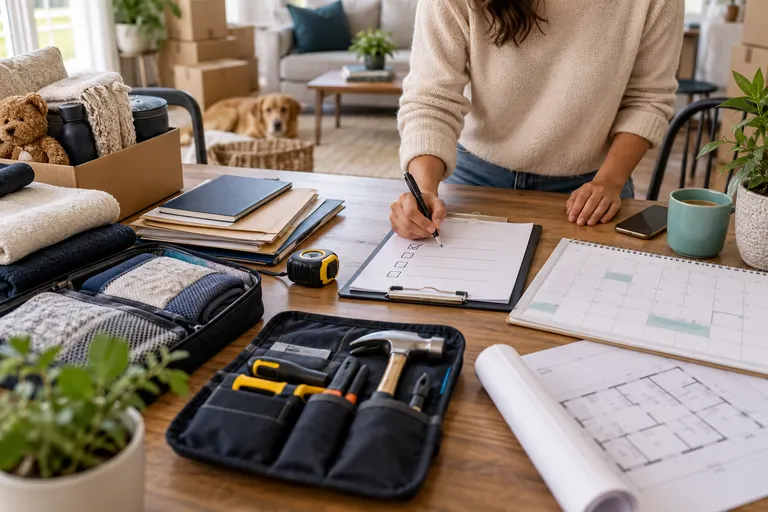
What to put in your household information folder
A household information folder is the single place where everyone in your home can find the contacts, documents, and instructions needed during a crisis, a move, or after a major life event. Without it, one person holds the shut-off valve map, another knows the insurance agent’s number, and nobody can find the appliance warranty when it fails. The folder solves that by making the information visible, shared, and structured so you can act without hunting.
What belongs in the folder
Build the folder around these categories. Each item includes the reason it belongs and the official source that confirms its contents.
Emergency contacts and utilities
- Primary numbers: fire, police, ambulance, poison control.
- Utility outage contacts: water, gas, electric, internet, trash collection.
- Out-of-area contact: one person who lives at least 100 miles away and can relay messages if local lines are down.
- Reason: when the power is out and your phone is dead, a printed list works. Source: FEMA Emergency Financial First Aid Kit (EFFAK), 2024.
Shut-off locations and diagrams
- A simple diagram showing the main water shut-off valve, gas shut-off valve (if applicable), and the main electrical panel.
- Reason: in a leak or before an evacuation, you need to turn these off in seconds, not minutes. Source: FEMA, 2024.
Warranties and major purchase records
- Warranty documents and purchase receipts for appliances, electronics, HVAC systems, roof, and major tools.
- Keep each warranty for its full duration plus one year after expiry.
- Reason: a warranty claim without the receipt and model number is often denied. Source: FTC, 2024.
Home inventory
- A list of major items with brand, model, serial number, purchase date, and estimated value.
- Update after any purchase over US$500 or after a life event (marriage, divorce, inheritance).
- Reason: insurance claims during a disaster are paid faster and more accurately when you have a written inventory. Source: FEMA, 2024.
Digital and document recovery copies
- Protected digital copies of: passports, driver’s licenses, birth certificates, marriage certificate, divorce decree, Social Security cards, insurance policies, will, power of attorney, property deeds, vehicle titles, medical directives.
- Store the digital copies in a cloud service that uses encryption, and keep one physical copy in a waterproof container kept off-site (safe deposit box or trusted relative).
- Back up the digital copies monthly.
- Reason: if originals are lost in a fire or flood, certified replacements take weeks; digital copies let you start the process immediately. Source: FEMA, 2024.
Emergency kit document list
- A single envelope inside your emergency kit that contains: insurance policies, IDs, medical information, and a copy of the home inventory.
- Reason: if you evacuate, you bring the kit, not the whole folder. Source: FEMA, 2024.
How to build it in one weekend
Day one: gather and verify
- Collect every warranty, receipt, and manual you can find. Check each against the FTC retention rule (duration plus one year, 2024).
- Draw the shut-off diagram. Walk through your home and mark each shut-off point. Take a photo and print it.
- List every contact. Call or text each person to confirm their number is correct. Update the list with the current date.
Day two: copy, store, and share
- Scan all vital documents. Use a free cloud service with encryption (such as Cryptee, or a password-protected folder in Google Drive with a strong, unique password).
- Write the home inventory. Use the FEMA EFFAK template (2024) or a simple spreadsheet with columns: item, brand, model, serial number, purchase date, estimated value.
- Place one set of physical copies in a waterproof container. Store that container in a safe deposit box or at the home of the out-of-area contact.
- Print one copy of the contacts, shut-off diagram, and warranty list. Place it in a clearly labelled folder in a central location (kitchen drawer, home office shelf).
- Tell every household member where the folder is and how to access the digital copies.
Which originals stay and which copies leave
| Document type | Original location | Copy location |
|---|---|---|
| Passport | Home safe or locked drawer | Protected cloud + off-site waterproof container |
| Birth certificate | Home safe | Protected cloud |
| Marriage/divorce decree | Home safe | Protected cloud |
| Will and power of attorney | Lawyer’s office or safe deposit box | Protected cloud |
| Insurance policies | Home folder | Emergency kit envelope |
| Property deeds and vehicle titles | Safe deposit box | Protected cloud |
| Medical directives | Home folder + doctor’s office | Emergency kit envelope |
Update the digital copies monthly. Update the emergency kit envelope whenever a policy or directive changes.
When to review and refresh
- Every 6 months: verify all contact numbers. Source: FEMA, 2024.
- After any major purchase or life event: update the home inventory and warranty records.
- Annually: check the emergency kit’s food and water expiry dates (replace water stored in plastic after 1-2 years; freeze-dried food after 3-5 years if stored below 75°F).
- Before a move: create a new shut-off diagram for the new home and update utility contacts.
- Before international travel: verify passport expiry against the destination country’s specific rule (some require 6 months beyond entry, others 3 months; check the destination’s official immigration website, not a third-party source).
Minimum documents for your evacuation kit
Inside a sealed waterproof bag inside your emergency kit, place:
- One printed copy of the contact list.
- One printed copy of the home inventory.
- Photocopies of each household member’s ID (passport, driver’s license, health insurance card).
- A list of current medications and dosages for each person.
- A list of allergies and blood types.
Reason: if you evacuate, you may not have time to grab the folder. The kit’s document bag gives you the information you need to file insurance claims, get medical care, and prove your identity at a shelter. Source: FEMA, 2024.
The one thing competitors won’t tell you
A household folder only works if it survives the event it was built for. Store the off-site physical copies with the out-of-area contact you listed in the emergency contacts section, not with a neighbour down the street. A flood, wildfire, or evacuation order that affects your home will likely affect your neighbour’s home too.
Frequently Asked Questions
How often should I back up the digital copies?
Monthly. FEMA (2024) recommends a recurring monthly backup to an encrypted cloud service and an off-site physical copy. Set a calendar reminder on the first of each month.
What if I rent and don’t own the home?
You still need the folder. Your renter’s insurance policy, utility contacts, shut-off diagram (if you have access to valves), and a home inventory of your personal property are all critical. The same FEMA checklist applies.
Can I use a digital folder instead of a physical one?
Use both. A physical folder works when the power is out. A digital folder works when you are away from home. Keep the physical copy in a central location and the digital copy encrypted in the cloud. Source: FEMA, 2024.
How do I verify that my emergency contacts are still correct?
Call or text each contact every 6 months. Confirm their phone number, email, and physical address. Update the list immediately if anything changes. Source: FEMA, 2024.
Read next
-
Moving-house checklist
A moving-house checklist turns a chaotic set of tasks into a sequenced, verifiable plan.
-
First-home essentials
The mistake most new homeowners make is buying everything at once. You end up with a dining table before you have a working kitchen, or a guest-room bed before you can cook a meal.
-
Home-maintenance calendar
A home-maintenance calendar turns recurring inspections and tasks into a schedule tied to the season, the household system, and the risk of failure.
-
Travel preparation
Travel preparation means building a source-verified plan that covers documents, health, security, home, and work before you leave.