Home-maintenance calendar
A home-maintenance calendar turns recurring inspections and tasks into a schedule tied to the season, the household system, and the risk of failure.
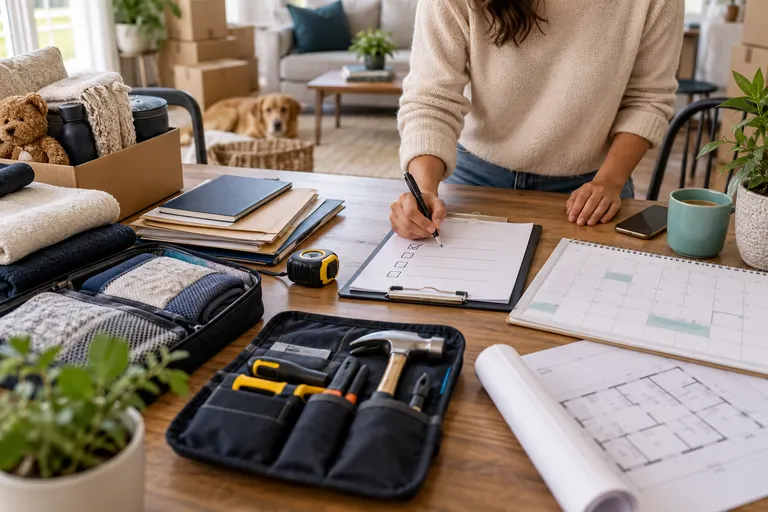
A home-maintenance calendar turns recurring inspections and tasks into a schedule tied to the season, the household system, and the risk of failure. The method below uses evidence-based intervals from official sources and gives you a usable decision rule: if a task is due, do it before the season changes, not after a problem appears.
Why a Calendar Instead of a Memory
The National Fire Protection Association reports that three out of five home fire deaths occur in homes without working smoke alarms. The most common reason for a non-working alarm is a missing or dead battery, a task that costs two minutes every six months. The U.S. Department of Energy states that a neglected water heater anode rod can fail in three to five years, leading to tank corrosion and a sudden leak. These failures are predictable, and a calendar is the only tool that turns that predictability into action.
The Seasonal Checklist
Use the checklist below as a starting point. Each item states why it exists and which official source confirms the interval. Adjust the month for your climate: spring tasks apply to the start of the warm season; fall tasks apply to the start of the cold season.
Spring (March, May)
- Test smoke and carbon monoxide alarms. Press the test button. Replace batteries if they fail. Per NFPA guidance, test monthly; the seasonal change is a natural reminder for battery replacement.
- Clean gutters and downspouts. Remove leaves and debris that block water flow. Per FEMA, this prevents ice dams in winter and foundation damage in spring rains.
- Inspect the roof. Look for missing, cracked, or curled shingles. Spring is the best time to catch winter damage before summer storms, per FEMA.
- Inspect the foundation. Walk the perimeter and check for cracks, settling, or moisture. Foundation issues worsen quickly if ignored, per FEMA.
- Test the sump pump. Pour a bucket of water into the pit to confirm the pump activates and drains. Do this in spring before heavy rain, per FEMA.
- Replace HVAC filters. Do this every one to three months during use, per ENERGY STAR. Spring is the changeover from heating to cooling.
- Service the air conditioner. Have a professional inspect refrigerant levels, coils, and drain lines before the first hot day.
- Check the water heater temperature. Set to 120°F (49°C) to prevent scalding and reduce energy use, per the Consumer Product Safety Commission.
- Inspect the fire extinguisher. Monthly visual check per NFPA: confirm the pressure gauge is in the green, the pin is intact, and there is no visible damage.
Summer (June, August)
- Test the generator. Run it for 30 minutes under a load (e.g., a space heater or a few lights) monthly, per FEMA. Change the oil after every 100 hours of operation or annually, per manufacturer guidelines.
- Check dryer vent and exhaust. Clean lint from the vent and exhaust duct annually, per NFPA. Dryers run more in humid weather, so summer is a practical window.
- Clean refrigerator coils. Vacuum the condenser coils every six months, per ENERGY STAR. Summer heat makes the compressor work harder.
- Test ground-fault circuit interrupters (GFCIs). Press the test button on each GFCI outlet in kitchens, bathrooms, and garages. Replace if the outlet does not trip.
- Check window and door seals. Look for cracked or missing caulk and weatherstripping. Seal gaps before fall.
Fall (September, November)
- Replace smoke alarm batteries and test alarms. Use the seasonal change as the twice-yearly battery replacement, per NFPA.
- Replace carbon monoxide alarm batteries. Same schedule as smoke alarms. Replace the entire unit every five to seven years, per the Consumer Product Safety Commission.
- Clean gutters and downspouts again. After leaves fall, per FEMA.
- Inspect the chimney and fireplace. Have a certified chimney sweep inspect and clean the flue annually, per NFPA.
- Winterize outdoor faucets and irrigation. Shut off outdoor water supply, drain lines, and disconnect hoses to prevent freeze damage.
- Inspect the roof again. Check for damage after summer storms and before snow loads begin, per FEMA.
- Service the heating system. Have a professional inspect the furnace, boiler, or heat pump before the first cold night.
- Replace HVAC filters. Changeover from cooling to heating.
- Check the water heater anode rod. Inspect every three to five years, per the Department of Energy. Fall is a convenient time because the water heater will be used heavily in winter.
Winter (December, February)
- Test smoke and carbon monoxide alarms. Monthly test per NFPA. Use the start of a new year as a visual cue.
- Test the sump pump again. If your area receives heavy rain or snowmelt, test monthly.
- Check for ice dams. After a snowfall, inspect the roof edge for ice buildup. If present, improve attic insulation and ventilation.
- Inspect attic for condensation. Look for frost on roof sheathing or damp insulation, which indicates poor ventilation or air leaks.
- Review the home inventory. Update your list of possessions annually, per FEMA. Winter is a low-outdoor-activity season.
Risk-Based Prioritization
Not every task has equal urgency. Use the following decision rule based on risk:
- High risk (do immediately if overdue): Smoke and carbon monoxide alarms, fire extinguisher readiness, gas and water shutoff valve knowledge. These tasks prevent catastrophic loss of life or property.
- Medium risk (do within the season): Roof inspection, gutter cleaning, HVAC filter replacement, sump pump test. These prevent gradual damage and maintain efficiency.
- Low risk (do annually): Radon test every two years (EPA), termite inspection (USDA), septic tank pumping every three to five years (EPA). These prevent long-term structural or health problems.
The Documents You Need
Keep these documents where all household members can find them, but not in the same place as the emergency kit (in case the kit is lost in a fire):
- Utility shutoff instructions. Write the location of the water shutoff valve, gas shutoff valve, and electrical panel. Per FEMA, every capable household member must know these locations.
- Model and serial numbers. For the water heater, furnace, air conditioner, sump pump, and generator. This speeds up replacement and warranty claims.
- Service records. Log the date and contractor for every professional inspection or repair. This helps you track intervals and prove maintenance for insurance claims.
- Home inventory. A list or video of your possessions with estimated value. Update annually per FEMA.
- Insurance policy declarations. Review annually per the National Association of Insurance Commissioners. Confirm coverage limits and deductibles for the most common risks in your area (flood, earthquake, wind).
The Deadline System
Set deadlines that are three weeks before the task actually needs to be done. This gives you time to order parts, schedule a contractor, or learn a skill. For example:
- Gutter cleaning: Schedule for September 10, not October 1. If a contractor is booked, you have a buffer.
- HVAC service: Schedule for September 15 for heating, April 15 for cooling. Peak seasons fill up fast.
- Smoke alarm battery replacement: Do it on the first weekend of daylight saving time (spring and fall). This is the most common and effective reminder.
The Emergency Kit
The emergency kit is not a separate project; it is a recurring calendar item. Per FEMA, review the kit every six months (same as smoke alarm battery replacement) and replace stored food and water that is within six months of expiry.
The standard FEMA-aligned kit includes:
- Water: one gallon per person per day for three days.
- Food: non-perishable, three-day supply.
- First aid kit.
- Flashlight and extra batteries.
- Whistle (to signal for help).
- Dust mask for each person.
- Moist towelettes and garbage bags (for sanitation).
- Wrench or pliers (to turn off utilities).
- Manual can opener.
- Local maps.
- Cell phone with chargers and backup battery.
Add the following based on your household’s specific needs: prescription medications (review expiry dates), glasses, hearing aid batteries, infant formula, pet food, and medical equipment manuals.
How to Make the Calendar Work
The most common failure mode is creating the calendar and never looking at it again. To avoid this:
- Put it where you already see things. Tape a printed calendar to the inside of a kitchen cabinet door, or set recurring reminders in a shared digital calendar that all household members can access.
- Assign one person to be the “calendar owner” for the season. That person is responsible for sending reminders, not for doing the tasks alone.
- After each task, note the date completed. This builds a record and helps you notice if a task is slipping.
- Review the calendar once a year (e.g., in January) and adjust intervals based on the age of your systems, the local climate, and any new official recommendations from FEMA, NFPA, or the CPSC.
Frequently Asked Questions
What is the single most important task on the calendar?
The most important recurring task is testing smoke and carbon monoxide alarms monthly and replacing batteries twice a year. Per NFPA (2024), the majority of home fire deaths occur in homes without working alarms. No other task has a comparable life-safety impact.
How often should I test the sump pump?
Test it in spring before heavy rain and again in fall before snowmelt, per FEMA (2025). If your area experiences heavy rain throughout the year, test it monthly during the wet season.
Who should I call for chimney inspection?
A certified chimney sweep who is a member of the Chimney Safety Institute of America (CSIA) or a comparable national body. Per NFPA (2024), the inspection must be annual, regardless of how often you use the fireplace.
When should I replace the entire smoke alarm unit?
Per NFPA (2024), replace the entire smoke alarm unit every 10 years from the manufacture date. The manufacture date is printed on the back of the alarm. If you cannot read it, replace the unit immediately.
Read next
-
Moving-house checklist
A moving-house checklist turns a chaotic set of tasks into a sequenced, verifiable plan.
-
First-home essentials
The mistake most new homeowners make is buying everything at once. You end up with a dining table before you have a working kitchen, or a guest-room bed before you can cook a meal.
-
Build a household information folder
A household information folder is the single place where everyone in your home can find the contacts, documents, and instructions needed during a crisis, a move, or after a major life event.
-
Travel preparation
Travel preparation means building a source-verified plan that covers documents, health, security, home, and work before you leave.